
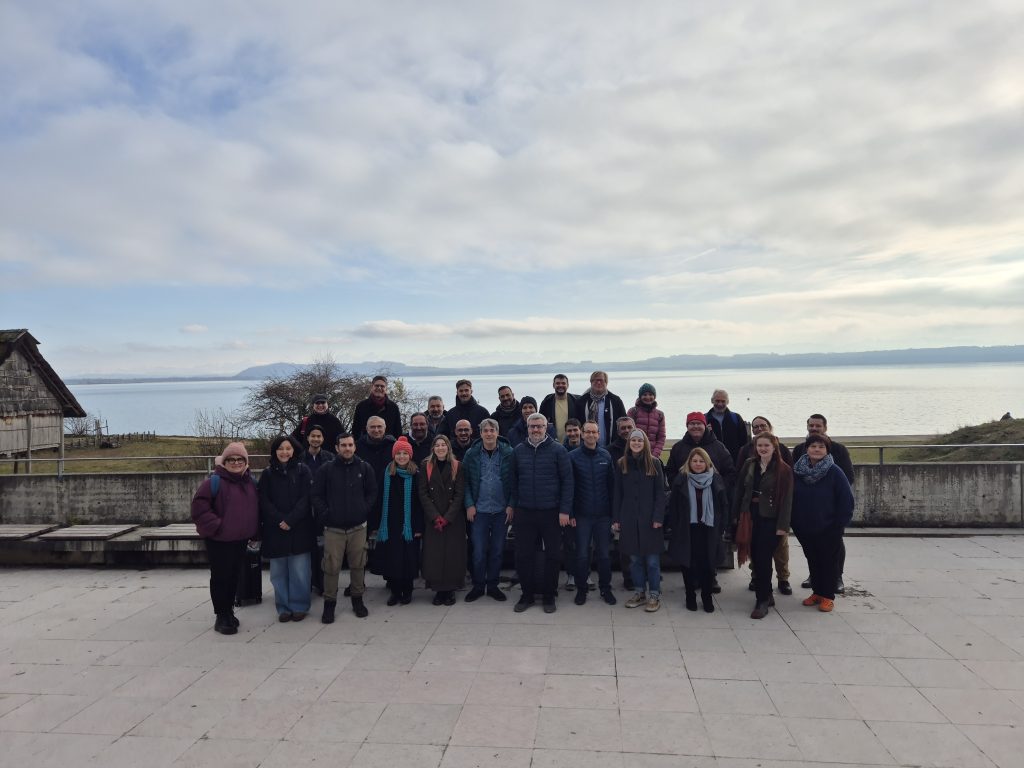
On 1–2 December, the TRIQUETRA consortium gathered in Neuchâtel, Switzerland, for the project’s final plenary meeting—a moment to take stock of our shared work, align on final details, and reflect on what it means to strengthen cultural heritage within Europe’s resilience agenda.
Bringing together partners from across disciplines and countries, the final plenary was both a milestone and a launchpad: a milestone because it marked the culmination of intensive collaboration; a launchpad because the outcomes, relationships, and learnings continue beyond the project’s formal timeline.
Day 1: Final plenary – presenting the work, results, and impact
The first day focused on a full plenary session, where we presented TRIQUETRA’s final work and results. Across the day, discussions highlighted:
- how project outputs can be adopted and reused by practitioners and institutions
- what we learned about integrating technology and data across diverse contexts
- the importance of interoperability for working across organisations, regions, and systems
- methods for meaningful societal engagement, especially when heritage intersects with risk, climate adaptation, and local priorities
- how to support sustainable funding and long-term maintenance of what we build
- the role of policy alignment in scaling and embedding results
Beyond presentations, the real value came from the exchange: partners stress-tested conclusions, shared what worked (and what didn’t), and captured final lessons for dissemination and exploitation.
From project results to wider community value
A key theme throughout the plenary was the “afterlife” of the project: ensuring that results don’t remain in reports, but translate into use in real settings—by heritage professionals, researchers, civil protection actors, policymakers, and local communities.
This is where collaboration across initiatives matters. TRIQUETRA has been working closely with other Horizon Europe projects in the “Green Cluster,” and the newly released Green Cluster White Paper (developed with RescueME, THETIDA, and STECCI) reflects this shared direction: strengthening cultural heritage as a core element of Europe’s resilience and sustainable development agenda through practical recommendations on technology integration, interoperability, engagement, funding sustainability, and policy alignment.
Day 2: Work Package Leaders meeting + field trip to the Laténium Museum
The second day began with a Work Package Leaders meeting, focused on closing the loop on any remaining items: resolving open issues, confirming final responsibilities, and ensuring all deliverables and communications were aligned and consistent.
Later, we shifted from meeting rooms to context: a field trip to the Laténium Museum, located beside Lake Neuchâtel. The visit was a powerful reminder of why this work matters. Cultural heritage is not abstract—it is place-based, material, lived, and connected to landscapes and communities. Seeing the museum setting and its relationship to the lake offered a timely reflection on exposure, vulnerability, and stewardship in a changing climate.